If you are planning a fuse board (consumer unit) upgrade or keep getting mystery trips, it helps to understand the difference between RCDs, MCBs and RCBOs. With a bit of plain English, you can see what protection you already have and whether a modern RCBO board could be worth the investment.
What MCBs, RCDs and RCBOs actually do
Modern fuse boards use a combination of devices to keep people and wiring safe. They all sit behind the front cover, usually in a neat row of switches, but they do different jobs.
MCB: protection against overload and short circuits
An MCB (miniature circuit breaker) looks after the cable and the appliances on that circuit. It trips if you overload the circuit by plugging in too many things, or if there is a short circuit where live and neutral touch directly.
This is what stops cables overheating and potentially causing a fire. However, an MCB does not detect small earth leakage currents that can be dangerous for people.
RCD: protection against electric shock
An RCD (residual current device) constantly compares the current flowing out on the live wire with the current returning on the neutral. If some current is leaking to earth, for example through a damaged cable or through a person, it trips very quickly.
RCDs are designed to reduce the risk of serious electric shock. BS 7671 (18th Edition wiring rules) expects RCD protection on many circuits, especially those serving sockets, bathrooms and outdoor equipment.
RCBO: combined protection in one device
An RCBO (residual current circuit breaker with overcurrent protection) combines the jobs of an MCB and an RCD in a single unit. Each circuit gets its own individual protection against both overload/short circuit and earth leakage.
This is different to older or basic boards where several circuits share one or two RCDs, which is when you are more likely to experience large areas of the property going off together.
MCB: overload and short circuit protection only
RCD: shock protection by detecting current leaking to earth
RCBO: combines both protections for a single circuit
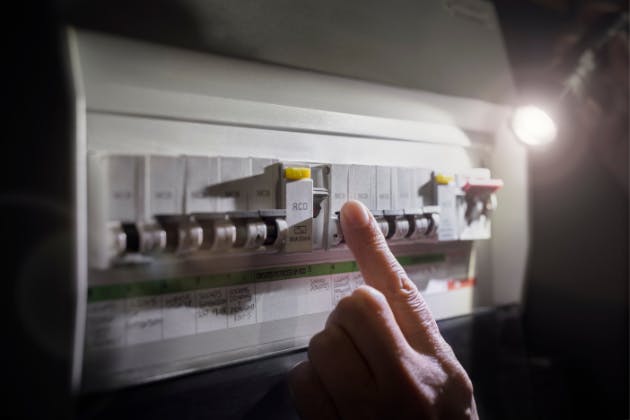
How a split-load RCD fuse board behaves
A common modern arrangement is a split-load board. You will usually see two main RCDs, each feeding a group of MCBs. If any circuit on that side of the board develops an earth leakage fault, the RCD trips and cuts power to all those circuits together.
For example, imagine a faulty kettle in the kitchen. When you plug it in and switch on, it leaks current to earth. The RCD that protects several downstairs circuits trips. You might lose the kitchen sockets, downstairs lights and possibly the fridge freezer in one go.
This design meets safety standards, but the drawback is inconvenience and sometimes food loss if you are away and the fridge has quietly gone off with everything else. It can also make fault finding slower because you are not sure which individual circuit is to blame at first glance.
How RCBO boards reduce “everything went off” moments
With an RCBO board, each circuit has its own combined protection. A fault on one circuit only trips that single RCBO. The rest of the house or business stays on, including critical items like fridges or office equipment.
Take the same faulty kettle example. Only the kitchen socket circuit RCBO trips, leaving lights and other circuits unaffected. You know exactly where the issue is, and you are less likely to find a freezer full of spoiled food days later.
This selective tripping is particularly helpful for:
Outside sockets and garden equipment that are more exposed to moisture
Bathroom circuits, where extra safety and fast fault isolation are reassuring
Fridge/freezer sockets, where nuisance tripping can be costly
Many newer boards with RCBOs are designed to align with current BS 7671 expectations for protection and circuit division, helping reduce both risk and disruption.
Real-world examples around the home and small business
Faulty appliances such as kettles or toasters
Heat and moisture can damage appliance wiring. A kettle with a failing element may work for a while, then suddenly trip protection every time it boils. On a split-load RCD board, this can plunge part of the property into darkness.
With RCBOs, that fault is contained on one circuit, without taking unrelated areas out at the same time. You still need the appliance checked or replaced, but life carries on more smoothly.
Outside sockets and garden gear
Pressure washers, lawnmowers and hot tubs are much more prone to moisture and cable damage. That is exactly what RCD protection is for. Having external sockets on their own RCBO means a damp connection in the garden does not knock out indoor lighting or fridge supplies.
Bathrooms and electric showers
Bathrooms are special locations in the wiring rules because of the increased shock risk around water. Circuits in these areas should have RCD protection, and RCBOs give that protection along with the ability to isolate only the affected circuit if something goes wrong.
Choosing between RCD and RCBO protection
A well-designed split-load RCD board can still be safe and compliant. For many homes, it provides good protection when circuits are sensibly arranged. However, RCBO boards add extra convenience, clearer fault isolation and less chance of everything going off together.
For small businesses with fridges, IT equipment or security systems, the reduced nuisance tripping risk can be especially attractive. It also helps electricians carry out targeted fault finding more quickly, which can save you time and call-out costs.
If you are curious about your options, an electrician can talk you through RCBO upgrades and link you to suitable pages such as fuse board upgrades and fault finding services on the NJ Electricals site.
When to speak to an electrician
Certain warning signs should never be ignored. If you notice any of the following, stop using the affected circuit or device and get professional advice:
Burning smell, scorching or discolouration around the fuse board or sockets
Consumer unit cover too hot to touch, or visible damage to breakers
Frequent, unexplained tripping even when you are not using much power
Sparks, crackling noises or buzzing from switches, sockets or the board
These can indicate loose connections, deteriorating wiring or faulty equipment that needs proper testing and repair.
Questions to ask before a consumer unit upgrade
Before you approve a new board, it is sensible to ask a few key questions so you know the job will be carried out properly and neatly:
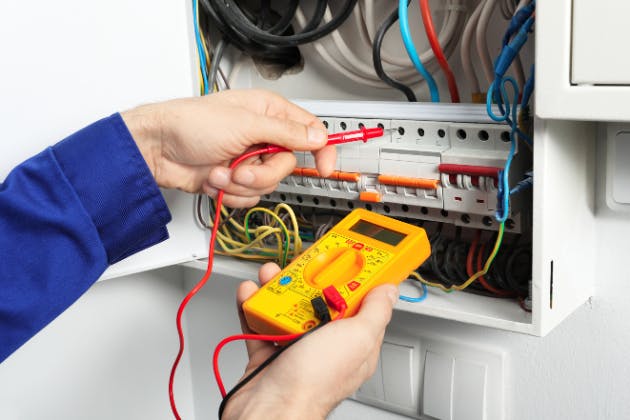
Ask your electrician what type of board they recommend (RCD / RCBO / a mix), and how they will separate critical circuits such as fridges, alarms and important lighting. Check that full testing of existing circuits is included and that you will receive the correct electrical certification afterwards.
It is also worth asking about clear labelling of each circuit, and how tidy the finished consumer unit will look. A well-finished job with labelled breakers and a smart, metal-clad board makes future maintenance and fault finding easier for everyone.
Next steps for safer, more reliable protection
Understanding the roles of MCBs, RCDs and RCBOs helps you make sense of your fuse board and the options available. If you are considering a consumer unit upgrade, struggling with nuisance tripping, or worried about anything you have seen or smelled around your electrics, it is time to get professional help.
For friendly advice, fuse board upgrades and thorough fault finding, contact NJ Electricals on 07590337287. An experienced electrician can assess your current setup, explain your choices in plain language and help you decide on the safest, most practical solution for your home or business.