Booking a consumer unit upgrade is a big step in improving your home’s electrical safety, but it can feel daunting if you do not know what will happen. Understanding the process takes away the stress and helps installation day run smoothly.
Before installation day
A good electrician will usually run through a few checks with you before the installation date. This might be during a survey visit or in a phone call a few days before the work.
They will want to confirm where your current fuse board and electricity meter are, and how easy they are to reach. Clear access helps them work safely and keeps the job on schedule.
Practical details are also important. Your electrician may ask about parking, pets and anyone in the home who relies on medical equipment. It helps to plan these things early so there are no surprises on the day.
Simple checklist to prepare your home
A little preparation can make your consumer unit upgrade smoother and less disruptive.
Charge phones, laptops and any battery-powered medical devices the night before
Tell your electrician about freezers, fish tanks or medical equipment that must stay powered if possible
Clear space around the existing fuse board and meter so the electrician can work safely
Arrange a safe space for pets away from the work area and front door
Make sure parking is available nearby for tools and test equipment
On arrival: access, safety and isolation of power
When your electrician from NJ Electricals arrives, they will introduce themselves, confirm the planned work and walk through any particular concerns you have. This is a good time to mention anything you are worried about, such as computer equipment, alarms or vulnerable family members.
Before any work begins, the electrician must isolate the power. This usually means switching off the main switch at the meter or isolator so the whole property is safely de-energised. You will be told clearly when the power is going off and given a rough time window for how long it will stay off.
In many homes the main power will be off for several hours while the old board is removed, the new metal consumer unit is fitted and tests are carried out. Some testing may happen with the power back on, but you should plan for a reasonable power-off period.
Initial safety checks: meter tails and bonding
With the power safely isolated, your electrician will carry out some important visual checks. They will look at the meter tails, which are the main cables running from your electricity meter to the consumer unit, to make sure they are in good condition and correctly sized.
They will also check the main earthing and bonding. Bonding is the cable that connects your electrical system to metal pipework, such as gas and water, to help prevent electric shock. If anything is missing, undersized or damaged, they will explain what needs to be upgraded and why.
These early checks help ensure your new consumer unit is supported by a safe, modern earthing system, not just new switches and breakers.
Taking out the old fuse board
Once the safety checks are complete, the electrician will remove the old fuse board or consumer unit. This may involve carefully disconnecting each circuit one at a time and labelling the cables as they go.
Older boards with rewireable fuses can be quite cramped or messy inside. A careful removal reduces the risk of loose connections or damage. The aim is to leave you with a neat set of cables ready to be reconnected into the new unit.
The old board will usually be taken away for safe disposal along with any waste that is produced during the work.
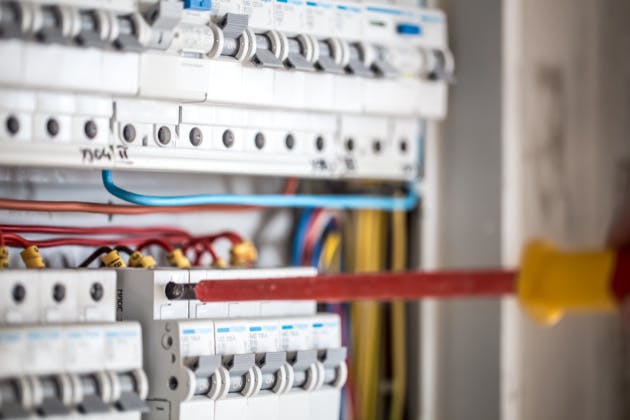
Fitting the new metal consumer unit
Modern consumer units are metal, as required by current wiring regulations, and are designed to be more fire-resistant. Your electrician will fix the new enclosure securely to the wall and feed in the correctly labelled circuits.
Inside the unit, they will connect each circuit to an appropriate protective device. This could be an RCD combined with circuit breakers, or a row of RCBOs which protect individual circuits.
Care is taken to keep wiring tidy and well supported inside the new board. A neat layout is not just attractive; it also makes future maintenance and fault finding quicker and safer.
Circuit identification and clear labelling
Good labelling is one of the most useful outcomes of a consumer unit upgrade. As each circuit is connected, your electrician will identify what it serves, such as kitchen sockets, upstairs lights or shower.
They will then label the switches and provide a circuit schedule, usually on the inside of the consumer unit door. This helps you quickly find and isolate a circuit in the future if you ever need to reset a trip or report a fault.
Testing: making sure everything is safe and compliant
Once everything is wired, the electrician will carry out a series of tests using specialist test equipment. These checks confirm that the installation is safe and meets current standards.
Key tests usually include:
RCD/RCBO tests to check that protective devices trip quickly enough if a fault occurs
Insulation resistance tests to confirm that cables are not damaged or leaking current
Polarity checks to ensure live and neutral are correctly connected at sockets and lighting points
Some tests are done with power off and some with power on. Your electrician will let you know when it is safe to use circuits again and will reset clocks and appliances where practical.
Keeping disruption low during the upgrade
A well-planned consumer unit upgrade should be tidy and as low-disruption as possible. Your electrician should protect floors and nearby surfaces, for example with dust sheets or floor protectors, especially if any drilling is needed for new fixings or cables.
You will normally be given a planned power-off window so you can work around it. Many customers choose to have the work done during working hours when the house is quieter, or on a day when children are at school.
At the end of the job, the work area should be swept, waste should be taken away and the new consumer unit left clearly labelled and easy to access. A quick walk-through of what has been done helps you feel confident using your updated system.
Paperwork: your electrical installation certificate
After testing, your electrician will complete an electrical installation certificate. This document records the work carried out, the test results and the condition of the installation at the time of the upgrade.
You should keep this certificate safe, as it may be needed for insurance, renting out the property or when you come to sell. In many cases the work will also be notified to Building Control under Part P, and you may receive a separate confirmation for this.
Next steps if you are in Swansea or the Cynon Valley
If you live in Swansea, Rhondda Cynon Taf or the wider Cynon Valley and are thinking about a fuse board upgrade, the next step is to arrange an assessment of your current consumer unit. An on-site visit allows your electrician to check earthing, bonding, access and any particular needs in your home.
You can learn more about what is involved and request a quote through NJ Electricals’ fuse board upgrades service page. For friendly advice or to book directly, call NJ Electricals on 07590337287 and we will guide you through your options and a suitable installation date.