If your fuse board keeps tripping, it can be frustrating and worrying, especially if it keeps cutting power at the worst possible moment. Understanding what the symptoms are telling you can help you stay safe and give a clearer picture to your electrician.
First checks when the fuse board trips
Before you start, remember you are dealing with electricity. If you feel unsure at any point, stop and call a qualified electrician. Never remove covers from the fuse board or touch bare wires.
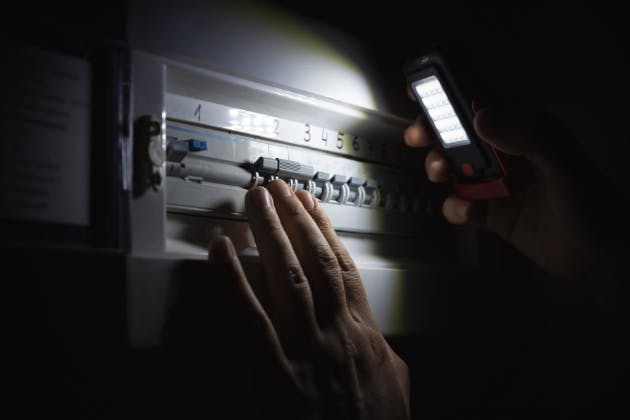
When the power goes off, look at the switches on your fuse board. You are usually looking for either a main switch or RCD that has flipped down, or a single circuit breaker (MCB or RCBO) that has gone off on its own.
Identify which switch has tripped (main RCD or single circuit)
Note what was running at the time (kettle, shower, tumble dryer, rain outside, etc.)
Reset once only, after unplugging obvious appliances on that circuit
A quick reset can be reasonable once, but repeatedly forcing a tripping breaker back on can be dangerous and may damage the wiring further.
When the whole house loses power
If the main RCD or main switch has tripped, you will usually lose power to most or all of the property. This points to a fault affecting more than one circuit, or a small leakage fault that the RCD has correctly picked up.
Main RCD tripping and what it usually points to
The RCD monitors earth leakage, so when it trips it often suggests moisture, insulation damage or a faulty appliance leaking to earth. Common causes include:
Outdoor or garden sockets are frequent culprits, especially after heavy rain. Water can get into socket fronts, extension leads, or junction boxes, causing the RCD to trip even with light use.
Safe steps you can take for whole-house trips
First, switch off all circuit breakers under the RCD, then try to reset the RCD. If it stays on, turn the breakers back on one at a time until the RCD trips again. This helps you see which circuit is linked to the fault.
Once you have found the suspect circuit, turn it back off and unplug all appliances on that circuit. This includes items hidden away such as garden tools on charge, outside fridges, pond pumps and extension leads. Turn the circuit back on and then plug items in one by one until the fault returns.
When only one circuit keeps tripping
If a single MCB or RCBO trips and the rest of the fuse board stays on, the problem is generally confined to that circuit. Typical examples are “upstairs sockets”, “kitchen sockets” or “shower”.
Overloaded circuits and high demand appliances
Overloading is very common on socket circuits. Electric heaters, kettles, tumble dryers and irons all draw a lot of current, and running several of these from the same circuit can push it beyond its rating.
If the breaker trips when you turn several large appliances on together, try moving some to a different circuit or not running them at the same time. If the breaker still trips with only light use, that suggests a fault rather than simple overloading.
Faulty appliances and damaged cables
One faulty appliance can continually trip a circuit. Heaters, kettles, washing machines and dishwashers are frequent offenders, especially if they are older or have visible damage to the flex.
Unplug every appliance on that circuit, including extension leads and multiway adaptors, not just switching them off at the wall. Reset the breaker and then plug items back in one by one. If plugging one item in causes an instant trip, do not use that appliance again and have it checked or replaced.
Intermittent trips that seem random
Intermittent tripping is often the trickiest to track down, because the fault may only appear in certain conditions, such as damp weather or under heavy load. Keeping simple notes can really help the electrician later.
Water ingress and weather-related problems
If trips seem to happen when it rains or when the garden is in use, water ingress is a strong candidate. Outdoor sockets, lighting, hot tubs, pond pumps and decking lights are common sources of moisture-related faults.
Do not open outdoor fittings yourself, as this can expose live parts. Instead, you can safely turn off the relevant circuit at the fuse board and avoid using outside equipment until it has been tested and repaired.
Loose connections and deteriorating insulation
Over time, cable insulation can break down and terminals can loosen, especially in older installations or where circuits have been altered. This can cause heat build-up, arcing and occasional trips before a more serious fault occurs.
Warning signs include a burning smell at sockets or the fuse board, discoloured or cracked accessories, or buzzing from switches. If you notice any of these, switch off the affected circuit if you can do so safely and call an electrician urgently.
Older fuse boards and fault-finding challenges
Older fuse boards with rewireable fuses or no RCDs at all can make fault finding much harder. They often do not trip as quickly as modern protection, which means dangerous faults can go unnoticed until damage has already occurred.
Because older boards lack separate RCD and RCBO protection, it can be difficult to see exactly which circuit is affected, and you may be forced to replace fuse wire repeatedly instead of simply resetting a breaker. This adds time, cost and risk.
When an upgrade is worth considering
If your fuse board is frequently tripping, and particularly if it is an older type, an upgrade to a modern consumer unit with RCD and RCBO protection is often recommended as part of putting things right. It can make future fault finding quicker and improve overall safety.
A modern board also provides better protection against electric shock and fire caused by earth leakage and insulation faults. Your electrician can test the wiring first to confirm it is suitable for connection to a new unit and advise on any remedial work needed.
Staying safe and when to call an electrician
It is reasonable to reset a tripped breaker once after unplugging appliances, but if it trips again, do not keep forcing it back on. That device is trying to protect you from a fault, and pushing past it can increase the risk of fire or shock.
If you see signs of burning, melted plastic, scorching around sockets, or you hear crackling or buzzing from the fuse board, turn off the power if safe to do so and call an emergency electrician straight away.
If you are in Swansea, Rhondda Cynon Taf or Cynon Valley and your fuse board keeps tripping, NJ Electricals offers a 24/7 emergency response and professional fault finding to get you back up and running safely. Call NJ Electricals on 07590337287 for prompt, expert help with tripping fuse boards, consumer unit upgrades and electrical safety checks.