Looking at your old fuseboard and wondering if it is still safe is very common, especially in older Swansea homes. A quick visual check will not replace a professional inspection, but there are clear signs that your consumer unit may be overdue an upgrade.
Understanding what “up to standard” really means
Electrical regulations are updated regularly as safety technology improves. The fact your fuseboard was safe when installed does not mean it still offers the best protection now.
Modern consumer units are designed to reduce fire risk, cut power quickly in a fault and clearly separate circuits. If your board lacks these features, it might still function, but it may not provide the best protection against shock or fire risks.
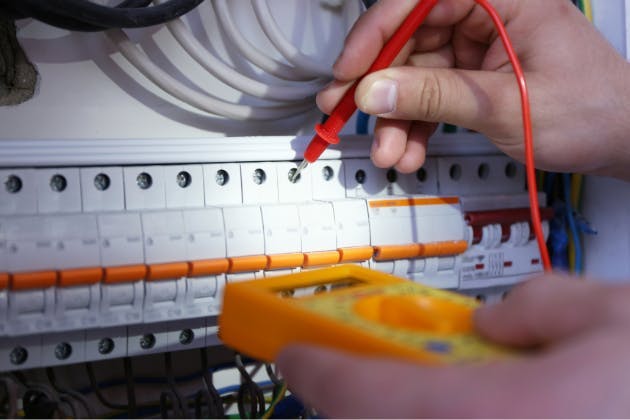
Quick visual checks any homeowner can do
Before you start, make sure the area around your fuseboard is well lit and easy to access. You do not need to remove covers or touch any live parts to carry out these simple checks.
As a starting point, look for:
-
Fuse type: old-style rewirable fuses or plug-in fuses instead of modern switches
-
Enclosure material: plastic casing instead of a full metal consumer unit
-
Test buttons: lack of RCD / RCBO test buttons on the front
-
Labels: faded or missing circuit labels, or handwritten notes you cannot read
-
Limited spare space: few or no spare ways available for adding future circuits, or the board appears crowded.
If several of these issues sound familiar, it is a strong hint that your fuseboard is older and could benefit from a professional review.
RCDs and RCBOs: the safety switches you should see
One of the clearest signs of a modern set up is the presence of RCDs (Residual Current Devices) or RCBOs. These are the switches with little test buttons, usually marked “T” or “Test”.
RCDs monitor the balance of electricity flowing in and out of a circuit and trip rapidly if they detect a fault, such as a person getting a shock or a cable being damaged. RCBOs combine this function with overload protection for individual circuits.
In many older properties only some circuits, if any, are protected, typically sockets that can be used outdoors. Current standards expect far wider RCD or RCBO protection, including for most socket and lighting circuits. If you have few or no devices with test buttons, your protection is likely outdated.
Metal enclosure and tidy installation
Modern consumer units are usually made from metal to help contain a fault or fire within the board itself. If your fuseboard is an older plastic type, especially a cream or brown colour, it is a sign it predates current fire containment expectations.
Take a look around the casing. Are there loose or exposed cables, gaps where breakers have been removed, or extra boxes and adaptors hanging off the side? A neat, closed metal enclosure with no obvious gaps is a good sign of a more modern installation.
Clear labelling and sensible circuit layout
Every switch or fuse should be clearly labelled so you know which one controls which part of your home. Being able to turn off a single circuit quickly in an emergency is important for safety.
If you see blank labels, scribbles you cannot read or labels that do not match what actually happens when you switch a breaker off, it suggests the board has been altered or extended over time. A well laid out, clearly marked board is not just convenient, it also reflects more careful workmanship.
Spare capacity and signs of overloading
A modern consumer unit should have some spare capacity for future circuits, such as an electric vehicle charger, new shower or kitchen refit. If every slot is full, or extra circuits look as if they have been squeezed in, it can limit what you can safely add later.
Other warning signs include miniature circuit breakers that feel hot to the touch, frequent tripping when you use several appliances together or a tangle of cables entering the board from all angles. These do not automatically mean it is unsafe, but they are strong reasons to ask a qualified electrician to assess the load and layout.
Older features that suggest you need an upgrade
Certain features are clear clues that your fuseboard is from a different era of wiring practice. Ceramic rewirable fuses with bits of fuse wire, wooden backboards or very small, flimsy plastic units are all signs of an ageing installation.
If your home still has a fuseboard near exposed timber, in a damp cupboard or mounted awkwardly over a door where it is hard to reach, upgrading can improve both safety and usability. These older set ups were never designed with modern electrical demands in mind.
When to call a professional in Swansea
A visual checklist will help you spot obvious issues, but only a qualified electrician can confirm whether your fuseboard meets current standards. They can also test your RCDs properly, check earthing and bonding and make sure your circuits are correctly sized.
If you have noticed several of the concerns above and live locally, it is time to talk to an expert about fuseboard upgrades in Swansea. An upgrade is an investment in safety, reliability and peace of mind for your home and family.
For friendly, professional advice and a clear quote on your options, contact NJ Electricals on 07590337287 or via our contact form. We can inspect your existing consumer unit, explain the findings in plain English and recommend whether a repair, partial upgrade or full replacement is the best route for your property.